

There is a gentle, natural way to support strong teeth and healthy gums. Tissue salts might be what you’ve been looking for.
Here’s what they are, how they work, and how to use them and tips for busy families.
What Are Tissue Salts?
Tissue salts, first developed by Dr. Wilhelm Schuessler in the 1800s, are micro-dose mineral remedies that help your body restore balance.
They’re often called “cell salts” because they provide essential minerals at a level your cells can absorb easily. When these minerals are low, problems like weak enamel, gum irritation, or slow healing can occur.
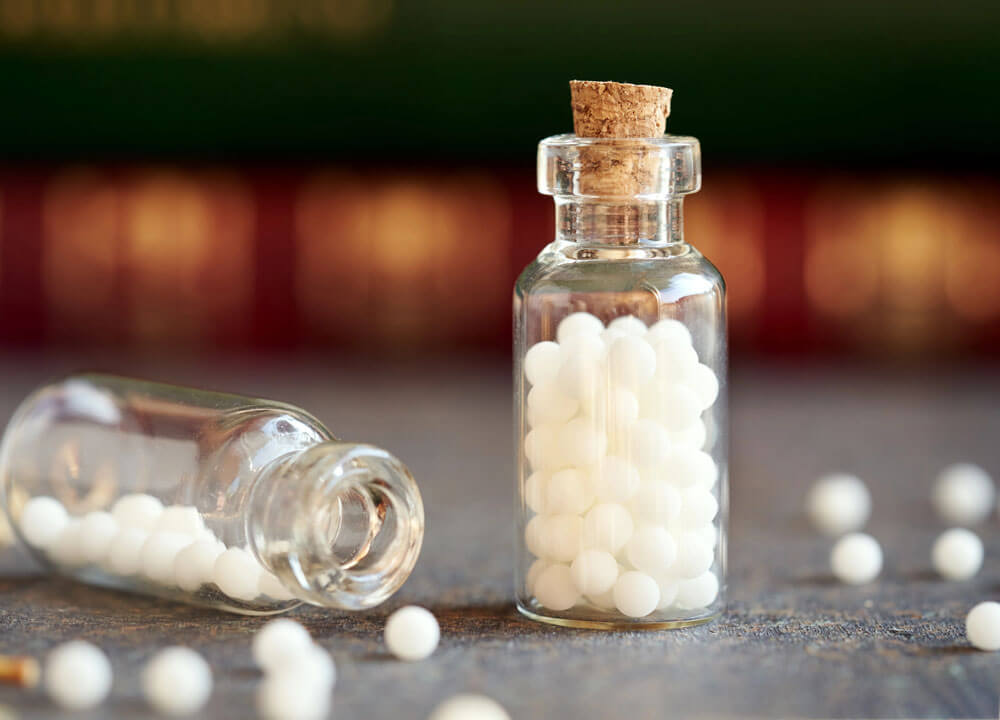
Altogether there are 12 tissue salts traditionally used to support healthy cellular function and mineral balance.
Traditionally they are used in a 6x or an 8x strength and in more recent times in a 3x. They often come in pill form but may also be used in drops or a spray.
How Tissue Salts Work
Unlike regular supplements, tissue salts are dissolved in the mouth, allowing them to be absorbed directly through the lining of the cheeks. This makes them:
- Easily absorbed
- They don’t need to be digested before being assimilated. Absorption is via the blood vessels in the mouth therefore chewing or sucking rather than swallowing them whole is preferred
- Gentle and safe – suitable for children and adults
- Complementary – can be taken alongside other supplements, conventional treatment or an individually chosen homeopathic remedy.
Best Tissue Salts for Dental Health
Out of the 12 tissue salts there are some which are known for their ability to support strong teeth and gums.
There is a combination which has become known for any chronic dental problem: Calc. 6x + Calc-f. 6x + Calc-p. 6x + Ferr-p. 6x + Mag-p. 6x + Sil. 6x:
- Calc. 6x (not a tissue salt, this is a homeopathic remedy that works well in this mixture) affinity for glands, skin and periosteum of bones, and for assimilation of calcium
- Calc-p. 6x gives solidity to the structure around teeth and encourages bone health. It is a nutritive tissue salt that promotes cell growth
- Calc-f. 6x strengthens enamel and helps prevent cavities
- Ferr-p. 6x supports gum health and circulation
- Mag-p. 6x calms nerves, supports muscles
- Sil. 6x builds strong connective tissue.
Taking these twice a day for several months, along with a tooth-friendly diet, may help prevent tooth decay and improve overall oral health.
Helpful During Orthodontic Treatment
For children and teens with braces, Calc-p. and Calc-f. are often recommended daily. They support the bone as it remodels, potentially making teeth move more smoothly and comfortably.
Demineralisation
Demineralisation is the loss of minerals (like calcium and phosphate) from the enamel surface due to acid exposure, typically from plaque bacteria:
- It happens after the tooth has erupted therefore it’s an acquired problem
- Causes: Frequent sugar intake, drinking juice, frequent snacks, baby food pouches, poor oral hygiene, acidic environment in the mouth
- Appearance: White chalky spots or dull, rough patches on the enamel
- Early demineralisation can be reversed.
Dental hypoplasia
Demineralisation is different to dental hypoplasia which occurs when enamel does not form properly, leaving it thin, pitted, grooved, mottled or partly missing. It may appear as white, yellow or brown areas on the teeth. In primary teeth, it may reflect health problems during pregnancy or infancy, while in permanent teeth it generally relates to disturbances during early childhood, when the teeth are developing beneath the gums. The defects often occur symmetrically and can reflect the timing of the disturbance during enamel formation. First molars and incisors are commonly affected. Possible contributing factors include nutritional deficiencies, vitamin D deficiency, high fever, trauma to developing teeth, tetracycline antibiotics, excessive fluoride, genetic conditions and coeliac disease.
Tissue salts may be used to support mineral balance and may be relevant where enamel is undergoing demineralisation, but they cannot restore enamel that was inadequately formed during tooth development, as occurs with dental hypoplasia.
Reversing Early Demineralisation Naturally
White chalky spots on teeth can be an early sign of enamel demineralisation, the first step toward cavities. Research shows that Calc-f. 6x can significantly improve enamel hardness when used consistently, offering a natural way to support remineralisation.
While tissue salts do help to strengthen or remineralise enamel, there is some debate as to what extent that can happen. If a cavity has already developed, consulting a dentist is essential to determine appropriate treatment. Early-stage cavities benefit from tissue salt remineralisation strategies, but more advanced decay typically requires dental interventions.
The Science Behind Calc-f. and Enamel Repair
One of the most fascinating studies on tissue salts comes from researcher Dr. Kalpana Bansal, who looked specifically at the effect of Calc-f. 6x on enamel strength.
She worked with children already undergoing orthodontic treatment and modified their dental appliances by adding small enamel slabs with artificially created weak spots (areas of early demineralisation). The children took Calc-f. 6x twice a day, letting the tablets dissolve slowly in the mouth for maximum contact with the enamel.
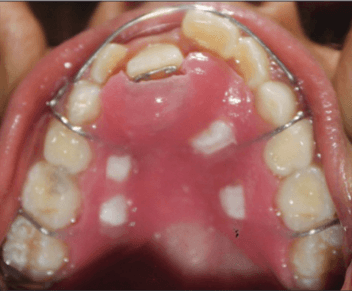
Removable intraoral appliance with artificial carious enamel samples
After six weeks, the results were striking, microscopic analysis showed a significant increase in enamel hardness compared to the group who didn’t take Calc-f.
This study confirmed two things: 1) Saliva itself helps remineralise enamel naturally and 2) Calc-f. boosts this process, making the enamel even stronger
The advantages are clear.
Calc-f. tissue salts are:
– affordable
– easy to use
– have no known side effects
– can benefit a wide range of people, including children
– helpful for families with limited access to more expensive dental treatments.
Making It Work for Busy Families
Consistency is key, but parents often admit they are just unable to give tissue salts regularly. Here are some practical tips:
- Link tissue salts with a daily habit, like brushing teeth
- Keep them somewhere visible, such as by the bathroom sink
- Focus on good foods to add to the diet (yoghurt, crunchy vegetables, water) instead of only on what to avoid.
When to Seek Professional Advice
If enamel defects persist despite regular use of tissue salts, an individualised homeopathic remedy may be recommended to address deeper factors. To work out an individualised remedy, the homeopath will ask questions about things like family history, pregnancy history, early childhood illnesses, use of antibiotics or nutritional issues.
And of course, regular dental check-ups are essential for catching and treating cavities early.
Takeaway
Tissue salts are a simple, affordable way to naturally strengthen teeth and support gum health. When used consistently and combined with good oral hygiene and a balanced diet, they can play an important role in preventing cavities. Also it is important to know what you are treating – is it demineralisation or hypoplasia?
Reference
Kalpana Bansal is a Pediatric Dentist. Her research team is interested in tissue salts. They are from the Department of Pedodontics and Preventive Dentistry, SGT Dental College, Hospital and Research Institute, Village Budhera, Gurgaon, Haryana, India.
Kalpana Bansal et al. “Remineralizing efficacy of Calc-f. tablets on the artificial carious enamel lesions using scanning electron microscope and surface microhardness testing: In vivo study,” Indian Journal of Dental Research 25, no.6 (2014): 777-782.