

If you are a mum who has been told that breastfeeding will ruin your child’s teeth, you are not alone. Many parents hear this from well-meaning health professionals, including dentists. Understandably, this can leave mums feeling anxious and guilty, as if feeding their baby in the most natural way has harmed them.
The truth is, breastfeeding does not automatically cause tooth decay. In fact, research shows it may actually help protect your child’s teeth, especially during the first year of life. So why does this myth persist, and what really causes tooth decay in young children? Let’s look at what the evidence says.
Why some dentists think breastfeeding is bad for teeth
The idea that breastfeeding damages teeth has been around for a long time, but it is not well supported by good science. There are a few reasons this belief lingers:
- Some research studies on this topic were poorly designed.
- Results of studies have often been misinterpreted.
- Many people, even some dental professionals, do not fully understand how babies breastfeed and swallow.
Breastfeeding is different from bottle feeding in important ways, and this changes how milk flows around the mouth. Firstly let’s look at what studies actually show.
What does research say about breastfeeding and tooth decay?
Studies have consistently found that breastfeeding up to 12 months helps protect against tooth decay.
When it comes to breastfeeding beyond 12 months, the results are mixed. Some studies suggest a possible link between extended breastfeeding and tooth decay. However, these studies often failed to consider how much sugar was in the child’s diet. We already know that high sugar intake is the biggest risk factor for tooth decay.
A 2020 study found that breastfeeding beyond 12 months was not linked to higher rates of decay. Instead, children who had more decay were often from families with lower incomes or who consumed more sugary foods and drinks.
And breastfeeding at night?
You may have been told not to breastfeed your baby to sleep or through the night because it will harm their teeth. This advice is not supported by quality research.
When a baby breastfeeds, milk is delivered to the back of the mouth, and they swallow it immediately. Milk does not pool around the teeth. When babies finish sucking at the breast, milk flow stops, unlike a bottle, which can continue to drip into the mouth if a baby falls asleep holding it.
There is no need to wake your baby or wean them at night just to “protect their teeth.” Instead, simply clean your baby’s teeth daily and offer healthy foods without lots of added sugar once solids begin at around six months.
Could breastmilk actually protect teeth?
Breastmilk is an incredible substance. It contains antibodies and special proteins that help control bacteria in your baby’s mouth. One of these proteins, lactoferrin, can even kill Streptococcus mutans, a bacteria responsible for tooth decay.
Unlike the sugars added to many formulas, lactose (the natural sugar in breastmilk) is not as easily used by these bacteria to make acids. Formula feeding, especially if a baby sleeps with a bottle, can make teeth more vulnerable to decay. Formula can lower the pH in the mouth (making it more acidic) and allow harmful bacteria to thrive.
Breastfeeding versus bottle feeding … why it matters
The way a baby drinks from the breast is very different from how they drink from a bottle:
- Bottle feeding: Milk flows to the front of the mouth and can sit around the teeth. If a baby falls asleep holding a bottle, milk may continue to leak, keeping teeth bathed in sugar.
- Breastfeeding: The nipple is drawn to the back of the mouth. Milk is swallowed immediately, not left sitting around the teeth. When sucking stops, milk flow stops.
This explains why the idea that breastfeeding to sleep “rots the teeth” does not hold up. The real issue is not breastmilk but bottle propping or letting a child sleep with a bottle in their mouth. Also beware of putting juice or milk in a sippy cup which the child can go to and access off and on, all day long.
Did children in the past get tooth decay from breastfeeding?
Looking at history gives us more clues. Archaeological studies show that tooth decay was extremely rare in prehistoric children — long before processed sugar entered the diet. These children were breastfed for years and almost certainly fed to sleep at the breast. If breastfeeding itself caused decay, we would expect to see widespread cavities in these ancient remains. But we don’t.

“Sucking smooth, sweet puree direct from a pouch is also a recipe for tooth decay” The Guardian 15 March 2025
So what actually causes tooth decay in babies and toddlers?
Tooth decay happens when several factors come together:
- High sugar intake: Frequent sugary foods and drinks are the biggest cause. Stick to whole foods, and offer water instead of juice or sweet drinks. Avoid baby food pouches.
- Harmful bacteria: If a parent has periodontitis or gum disease then bacteria can be passed to babies by sharing spoons, cleaning dummies with your mouth, or kissing them on the lips. Running a dummy under the tap is better than “cleaning” it with saliva.
- Low saliva flow: Saliva helps wash away sugars and acids. Babies naturally produce less saliva when sleeping, and some medical conditions (such as asthma or prematurity) may reduce saliva flow. This is my chance to give you a homeopathy hint here: babies and toddlers who are not thirsty (despite having a dry mouth) will often benefit from the homeopathic remedy Pulsatilla.
- Poor family oral hygiene: Parents’ own dental health matters. Habits such as brushing twice daily and going for regular check-ups are more easily reinforced when both mum and dad are on board.
- Low maternal vitamin D status during pregnancy leads to early childhood decay in deciduous teeth
- Weak enamel from birth: Some babies are born with enamel hypoplasia (thinner enamel), which makes teeth more vulnerable. This can happen if mum smoked during pregnancy, had nutritional deficiencies, or if the baby was born early or underweight.
- Medications in a sugar-based syrup
- General health conditions: Chronic illnesses, mouth breathing, tongue and lip ties, enlarged tonsils/adenoids, recurrent infections, or malnutrition may also increase the risk. Here’s another of my homeopathy tips: mouth breathing and enlarged tonsils/adenoids respond well to homeopathic remedies.
Chewable vitamin C tablets (A warning)
Chewable vitamin C tablets are highly acidic, with pH levels around 2.3, significantly below the critical pH of 5.5 at which tooth enamel begins to dissolve. Vitamin C should be taken in a manner which doesn’t leave a residue in the cracks of the teeth for an extended time.
Children should never use chewable vitamin C tablets. In comparison to citric and phosphoric acid, which is found in many carbonated drinks, ascorbic acid has been proven to be relatively more erosive.
This increases the risk of cavities, especially if mineral deficiencies like calcium and phosphorus already exist. Try powders dissolved in water, to minimise direct contact with teeth.
How can parents best protect their baby’s teeth?
The good news is you can prevent most dental problems with a few simple steps:
- Keep breastfeeding if it works for you and your baby. There’s no need to wean early to “save their teeth.”
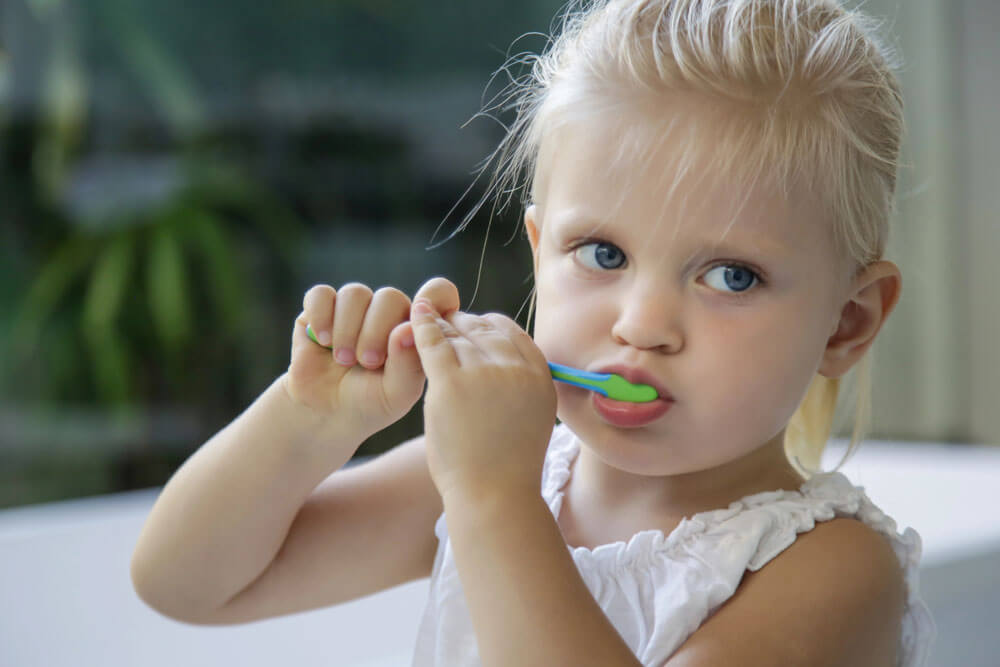
- Brush your child’s teeth twice daily as soon as teeth appear.
- Limit sugary snacks and drinks. Offer water as the main drink.
- Look after your own dental health. A healthy mouth for parents means fewer bacteria passed to baby.
- Avoid sharing spoons, cups, or toothbrushes with your child.
- Take your child to the dentist early. A first visit around their first birthday is ideal to get advice and catch any issues early.
The takeaway for parents
Breastfeeding is not the villain in early childhood tooth decay. In fact, it is likely to be part of the solution … giving your baby the best nutrition, immune protection, and possibly even dental benefits during their crucial first years.
If you’ve been told you are harming your child’s teeth by breastfeeding, know this: you are not to blame. Tooth decay is caused by a mix of factors, especially diet, bacteria, and oral hygiene, not by the act of breastfeeding itself.
You deserve accurate information and support, not judgment. By brushing twice a day, limiting sugar, and visiting the dentist early, you’re already doing the best thing for your child’s teeth — whether you breastfeed for six months, a year, or longer.
A couple of references
2014
2020
2023
2025

- Homeopathy for Waterlogged Plants and Gardens - 12/12/2025
- Homeopathy for Plants - 11/10/2025
- Uncovering the Truth: Does Breastfeeding Lead to Tooth Decay? - 01/09/2025